Friday 5 December marks International Volunteer Day, a celebration and recognition of the integral work and efforts of volunteers across the globe.
3.3 million Victorians volunteer in their community, contributing over 732 million voluntary hours collectively per year.
When it comes to building a sense of community through volunteerism, the Yarra Ranges is no exception.
From emergency services and township groups to environmental and food aid organisations, the Yarra Ranges is home to a broad volunteering base on which its function depends.
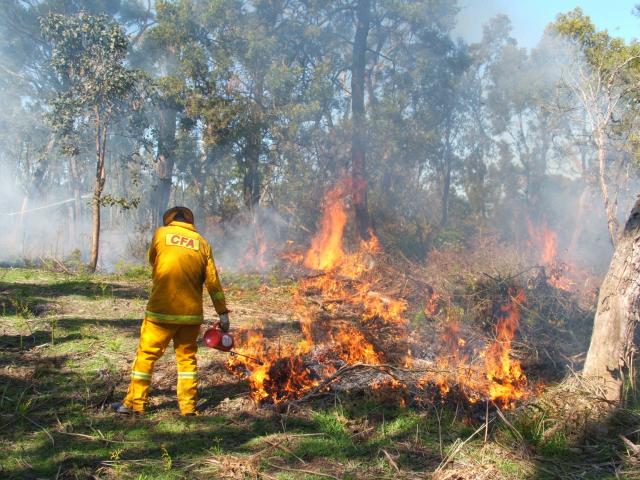
The Country Fire Authority (CFA) is one such example of the indispensable roles of volunteers across the Yarra Ranges.
Captain of the Wesburn/Millgrove CFA Sascha Grant has been volunteering for the CFA for over twenty years alongside working a full-time job.
“I have been a trainer, an assessor and a CFA peer support programme leader for members that need some support to deal with trauma from things they have witnessed. We support their families as well,” Sascha said.
Volunteering a minimum of six hours per week as captain, Sascha’s role includes administrative duties within the brigade itself, such as completing paperwork, conducting maintenance at the station, attending regular training and meetings with the brigade management team, and is always on call should an emergency occur.
“I have got a very flexible work relationship with my full-time employer, so not only can I go out after hours, but I can also get out the door during the day,” Sascha said.
“We have had more than 80 calls this year alone and I have attended the majority of those calls.”
“We have members with varying availability so we have some who can only get to a handful of jobs and others who attend almost all of them,” Sascha said.
Committing a minimum of five to six hours of volunteering per week, Sascha said his connection to the community is what he loves most about volunteering at the CFA.
“I have lived in the Yarra Valley since 2018 and I have gotten to know the local community,” Sascha said.
“Having the community grow to respect us and the work that we do also sort of puts them in charge. It lets them take a little bit of ownership of their own community and their neighbours and friends,” he said.
“It is also amazing to see the development of that sense of ownership and community within the Brigade as well. The personal growth and comradeship that we get out of coming together as a brigade is really important.”
The Wesburn/Millgrove CFA are beginning a recruitment campaign and are looking for feedback on how to engage community members.
Sascha said, “We need more firefighters. A lot of our members work outside of the local area, so it makes daytime response a bit challenging at times.”
“Because this is a volunteer organisation, there is no expectation that people will be available all of the time, so if we have a lot of members, we can spread the load around and make sure that when the truck goes out the door, there are enough people on it,” he said.
“Having a positive outcome is also so important. As a firefighter, we turn up to people when they are having a bad day and it is our responsibility to look after them and turn their day around where possible.”
The CFA recruits anyone aged sixteen and above, but reserves fire truck driving and the attendance of more serious incidents for those aged 18 and over.
With approximately 30,000 volunteer firefighters, the CFA is the largest volunteer firefighting force in the world.
“The costs would be too prohibitive for a paid model,” Sascha said.
While Forest Fire Management Victoria and Melbourne Water look after Crown Land and water catchments, the CFA is left to pick up the pieces for private property.
“If the CFA wasn’t here, there would be very little in the way of available firefighting forces,” Sascha said.
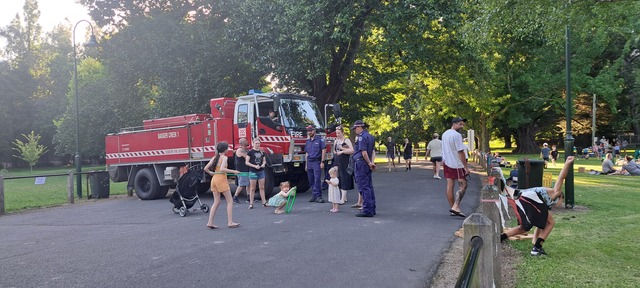
The Wesburn-Millgrove CFA will be holding Santa photos on both Sunday 14 and Saturday 20 December between 10am and 2pm, and encourages locals to go down and have a chat.
Sascha said, “If members of the public are curious about the fire station I will be there on those days and while they get their photos with Santa, they can ask me or other members any questions about volunteering and fire safety.”
Beyond fire response, local attractions also depend on volunteers to function.
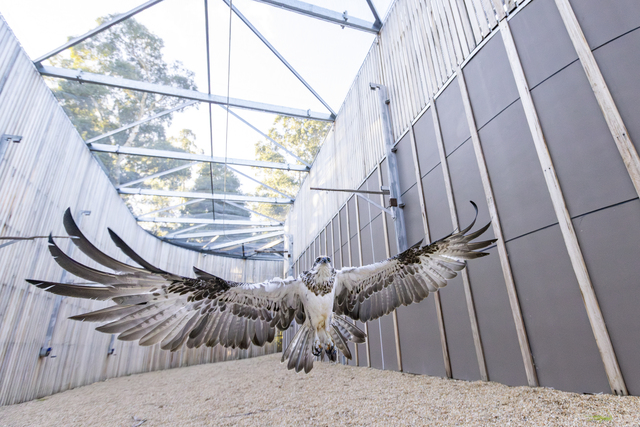
Healesville Sanctuary is home to over 300 volunteers, and relies on them for a variety of items, including their deliverance of positive customer experiences.
Volunteer Coordinator at Healesville Sanctuary Cheyne Willson said, “We have paid staff and volunteers working side by side to give the visitors the best possible experience here at the Sanctuary. They are also there to give our staff a bit of a hand across the board.”
“We have volunteers here who have been with us for 65 years, and that sort of knowledge and experience is so vital,” Cheyne said.
“If we find someone who is at the end of their employment time but they are willing to put something more in, that is a perfect opportunity for us to hold on to their experience.”
With a range of volunteering roles and opportunities from visitor hosts who welcome and direct visitors, to a horticulture and even an archives team, the sanctuary’s volunteer program began in the early 2000s and was titled ‘Friends of the Zoo.’
Now the program is a career pathway for keen conservationists, vets and zoologists, as well as a haven for those who simply love wildlife.
Cheyne said, “We have got a couple of new roles that are starting. One is a bushland assistant role, which is tying in with horticulture, trying to bridge the gap between people getting into the industry and volunteering.”
“Participants need roughly 110 volunteering hours to get through to the next step, so we are trying to give something back to them now after having all these people come and help us with the gardens,” Cheyne said.
“We have also got a life sciences assistant role, which is another bridge between volunteering and employment as a zookeeper.”
The Sanctuary onboards between 300 and 325 volunteers and all volunteers require a working with children’s check.
Cheyne noted the key roles volunteers play in keeping the sanctuary running.
“I don’t think we could have a full load of paid staff to be able to deliver everything that we have on offer here,” Cheyne said.
“I came into this role having already been a manager of volunteers in the past and I have found the cohort that I am managing at the moment to be so passionate and they really empower themselves to give the most here. It really took me by surprise when I started,” he said.
“This is the absolute, hands-down, best volunteer cohort that I have ever worked with. Their culture is so positive and I don’t think we could ever let that go.”
Retiree and volunteer at Healesville Sanctuary Jill has been committing her time to the Sanctuary for almost a decade.
“I saw an article in the Sunday Age about volunteering at the Sanctuary, and I love animals and talking to people so I decided to take it up,” Jill said.
“I particularly love passing on my passion and trying to get people engaged with the plight of animals and transfer that conservation message.”
Jill loves engaging with visitors and getting them interested and excited about animals and conservation the most.
For Jill, every day as a volunteer is different.
“When I am the volunteer team leader, I work out the programme for everyone who has put their name down for a shift.”
“The volunteers can do a lot around the sanctuary so we will have at least two in the land of parrots, someone going through the lyrebird aviary…and if it is a busy day, we will have people at the information booth to help people find their way and telling them what is on.”
Jill’s favourite volunteer job is being a tour guide.
Over in the hills, the Southern Dandenongs Community Nursery (SDCN) works to grow and protect native species of plants for the Yarra Ranges.
Volunteer at the SDCN Pam Bradley said, “Every seed sown and every plant raised goes toward protecting local wildlife habitat and strengthening our environment.”
“Volunteering at the SDCN is a hands-on way to connect with nature and learn about the plants that belong in our beautiful Dandenong Ranges,” Pam said.
“There is something very satisfying about nurturing a tiny seed and watching it grow into a plant that will restore bushland in our local area and volunteers love knowing that their work directly helps schools, community groups and bushland reserves across the hills.”
The SDCN welcomes people of all ages and backgrounds and has a variety of jobs and volunteer roles available to people of all levels of fitness, and planting abilities.
These roles range from sowing and potting to labelling, and watering, or just chatting and helping out.
Pam said, “Volunteering at the nursery is relaxing, meaningful and fun all at once.”
You walk away knowing that you’ve helped the environment, supported your community and had a good time doing it.”
While food relief and conservation are what first comes to mind when thinking about volunteering, the Yarra Ranges art and music scene also depends heavily on volunteer efforts.
Former Hills local and volunteer at 3MDR radio station Teagan said, “I chose to volunteer at 3MDR because I grew up in the hills.”
Having moved to the city to find work in the music industry, Teagan found herself returning to the Hills for work experience.
“Since I moved to the city, I have noticed that everyone there tends to just look out for themselves, which can be a good thing, but I always felt a bit weird trying to find places I wanted to work there,” Teagan said.
“I went back to where I came from thinking that I would find people that were a little bit more like-minded and I did.”
“I forgot how strong the community is up in the Hills and how much everyone looks out for one another. Even the sponsors at the radio station genuinely care about who they are working with and they want to be working with good people, and I think it is a very good foundation to have for any kind of organisation,” she said.
While Teagan’s stint with the station was initially to organise her appearance as a musician on one of their live broadcasts, this arrangement evolved to a long-term volunteer role.
From voicing ads, editing audio and managing live broadcasts, to making playlists and packing merchandise, Teagan is well and truly entrenched in the station’s operations.
According to Teagan, when it comes to volunteering, community is everything.
“Community is something that we take for granted and it is something I definitely took for granted when I was growing up in the Hills,” Teagan said.
“Seeing the people that founded 3MDR, they founded it because they wanted to connect with their community,” she said.
“The people here at 3MDR are really genuine and passionate about the station.”
3MDR was formed after the Ash Wednesday fires that swept through the Hills. The purpose of the station was originally to provide an information resource for people to find where to get food, water along with keeping up to date on extreme weather updates.
For Teagan, volunteering is also about connecting with your roots.
“It is important to volunteer because it reminds you of where everyone has come from and why they are so passionate, and that not every effort you put in should be for the sake of building something for yourself,” Teagan said.
“You should be connecting with people as much as you can.”
“Having the support of your community is something people take for granted, and we should give back more.”
While volunteering is about giving back to the community, it can also be about career building at the same time.
“A lot of people my age are really struggling to get jobs at the moment because you need experience,” Teagan said.
“The first thing I tell them is to volunteer first, because it hits two birds with one stone,” she said.
“You get to help out people from your local community, and you get enough experience for your career down the line.”
Wildlife rejuvenation, and conservation are also causes for much volunteering in the Yarra Ranges.
Zoologist and CEO of the Bungalook Creek Wildlife Shelter Dr Emma Cash works a full-time job to support her volunteer efforts.
Founded eighteen years ago in Montrose, the Bungalook Creek Wildlife Shelter cares for and rehabilitates Australian native wildlife.
Emma said, “We have animals that come in as orphans, but also victims of road incidents, shootings and dog attacks – you name it, we get it.”
“We spend a lot of time caring for these animals and getting them back out into the wild, which is where they belong.”
“Our main shelter is now in Mount Evelyn, but we still have one of our satellite shelters in Montrose and other areas,” she said.
Emma funds the Bungalook Creek Wildlife Shelter out of her own pocket. This contribution equates to approximately $52,000 per year.
“When we get animals in, if there is a joey in the pouch, that is about a $3000 raise,” Emma said.
Despite the financial and time constraints, the Yarra Ranges continues to foster a sense of community care.
With a recent study by Volunteering Victoria finding that 15.5 per cent of the Yarra Ranges population reported doing some form of voluntary work in 2021, this figure is estimated to have grown post-pandemic.