About one-in-three Australian students are failing to meet basic literacy and numeracy standards, as entrenched disadvantage widens educational disparities.
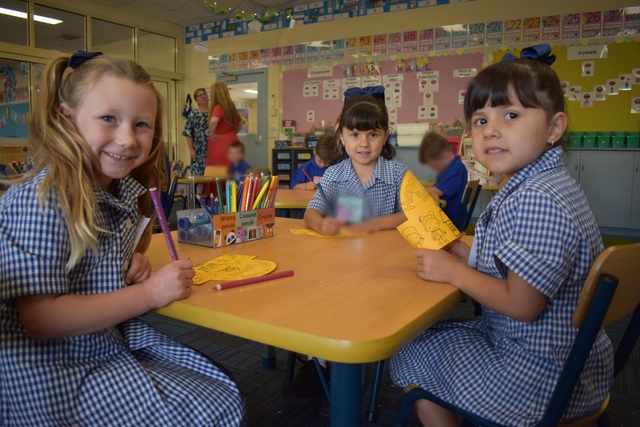
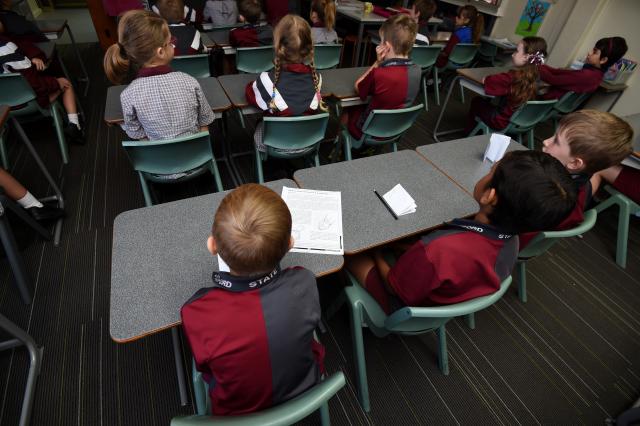
Almost 1.3 million students across more than 9400 Australians schools and campuses took the National Assessment Program – Literacy and Numeracy (NAPLAN) for those in years three, five, seven and nine.
Among the youngest students, 34.7 per cent were rated as “developing” or “needing additional support” in numeracy, while 31.8 per cent tested in these levels in the reading exam.
Year five students performed slightly better with 30.5 per cent testing in these categories for numeracy and 26.9 in reading.
But the general trend echoed across year groups and Education Minister Jason Clare says more must be done.
“We have a good education system but it can be a lot better and a lot fairer and that’s what these results again demonstrate,” he said on Wednesday.
The Australian Curriculum, Assessment and Reporting Authority (ACARA) changed the NAPLAN proficiency standards in 2023, which makes it difficult to explore trends and compare data.
The 2024 results show there is no significant difference in average scores over the previous two years, which ACARA chief executive Stephen Gniel has lauded.
“The fact that the results of Australian students have remained stable…is an important achievement,” he said.
However, there are still significant gaps between different demographics across the tests for numeracy, reading, writing, spelling, grammar and punctuation.
Girls outperformed boys in writing, with 73 per cent testing at “strong” or “exceeding” levels, compared to 58 per cent of boys in year seven.
Boys performed better in numeracy compared to girls, with 5.9 per cent fewer girls in year three achieving the “exceeding” levels and 6.7 per cent fewer in year five.
The results also showed a higher proportion of Indigenous students needed additional support.
In both reading and numeracy, about one-in-three First Nations children tested in the “needs additional support” proficiency level compared to one-in-10 non-Indigenous students.
A divide between urban and rural schools also appeared in the results, with 24 per cent of students from very remote schools being rated as “strong” or “exceeding” compared to 70.7 per cent of students from major city schools.
“Your chances in life shouldn’t depend on your parents’ pay packet or the colour of your skin, but these results again show that’s still the case,” Mr Clare said.
He urged states to sign on to the federal Better and Fairer Schools Agreement, which will provide support and an additional $16 billion in funding with the hopes of increasing the number of year 12 finishers by 7.5 per cent to 83.8 per cent by 2030.
The NT and WA governments have agreed, but other states are holding out as negotiations continue over the level of funding each government is expected to provide to reach the Schooling Resource Standard.
Australian Education Union federal president Correna Haythorpe said the results were a damning indictment on the failure of governments to fully fund public schools.
But she said it won’t be achieved by the federal government’s plan.
“Australia cannot close achievement gaps without closing resourcing gaps,” she said.
“Teachers and education support personnel work very hard to cater for all of their students’ needs but they must be backed by governments with full funding.”
Liberal senator Jane Hume said there needed to be greater focus on teaching methods, particularly on approaches to reading and improving educational resources.
“Let’s not forget that some of these kids were caught up in that black swan (Covid-19) event that affected so many kids’ educational outcomes,” she told Sunrise.
“You can’t do maths from a maths textbook if you can’t read.”
NAPLAN participation rates remained steady, with the proportion of students taking part increasing slightly to 93.4 per cent compared to the previous year.