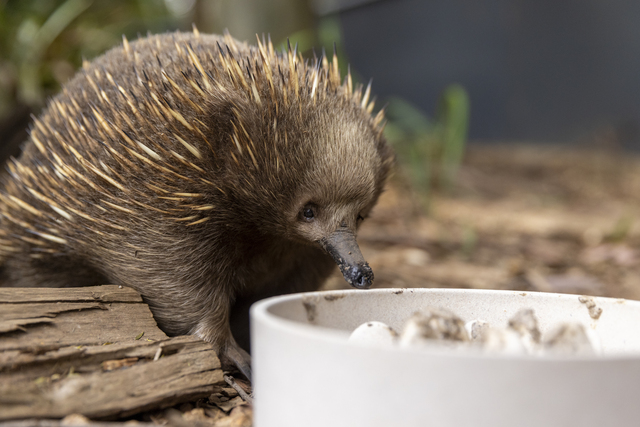
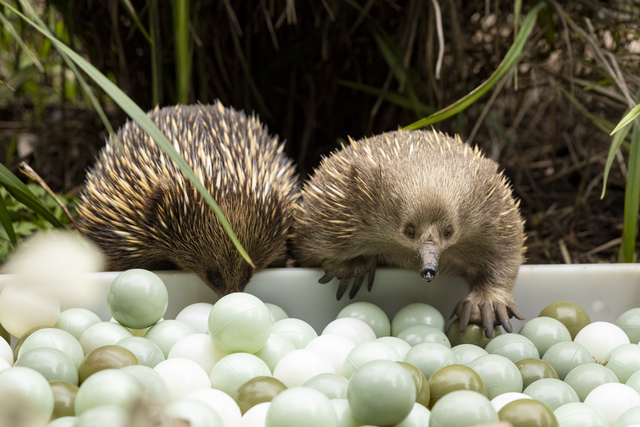
It was 1985: Live Aid was uniting the globe, hair was BIG and shoulder pads even bigger, it was also the year a young echidna named Snoopy arrived at Healesville Sanctuary.
The orphaned juvenile needed care at the Sanctuary’s Australian Wildlife Health Centre.
Deemed unsuitable to return to the wild as a youngster, she has been living out her days in the bushland haven, waddling around and inspiring generations to connect with native animals.
While Healesville Sanctuary Mammal Keeper Taylah Conlin wasn’t even born when Snoopy arrived, she loves taking care of this old monotreme in her twilight years.
“She is a little bit slower now that she’s older, but otherwise Snoopy is in good health,” Ms Conlin said.
As a geriatric animal Snoopy receives special support from the wildlife vets who often visit her habitat, so she doesn’t need to go anywhere.
“We have regular health checks, as well as general anaesthetics to assess her body condition and X-Rays to check for arthritis and other age-related issues,” Ms Conlin said.
“We closely monitor her movement, gait, appetite, and demeanour to ensure she is comfortable in our care.”
Snoopy also receives a nutritional supplement at mealtimes to maintain the quality of her quills and fur in her old age.
Conlin admits for an elderly echidna, Snoopy still keeps up with Matilda her 15-year-old roommate.
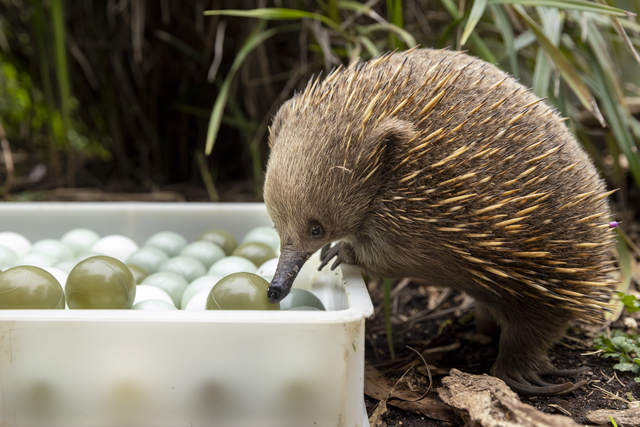
“We recently introduced a ball pit into their habitat a part of our enrichment strategy for our echidnas. It helps to promote natural behaviours such as foraging and maintain cognitive health by spiking their inquisitive nature, which we love to see,” Ms Conlin said.
Snoopy reaching this remarkable longevity feat is a testament to the care she receives at the Sanctuary.
Echidnas have been known to live up to 50 years in a zoo setting. In the wild, guidance on lifespan ranges from 14-40 years old. It is believed their low body temperature and slow metabolism help them live longer too.
Visitors can find Snoopy in the front entrance echidna habitat right next to the admissions gate at Healesville Sanctuary.
Nine echidnas call the Sanctuary home. There are also wild echidnas that roam through from time to time.
Echidnas are part of a unique group of egg-laying mammals known as monotremes. There are only two types of monotremes in Australia, echidnas and Platypuses.
Echidnas are adaptable and can be found across Australia in diverse environments from rainforests to suburban areas and even deserts.