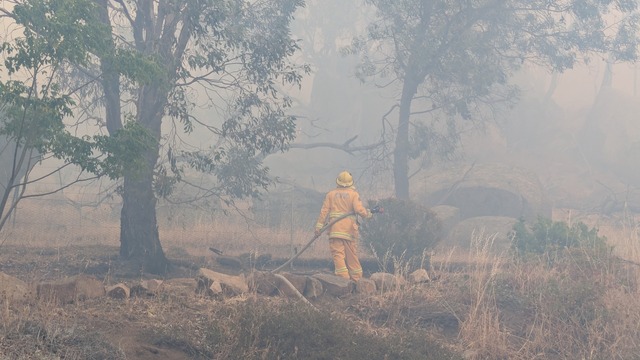
A new report by the Climate Council and Emergency Leaders for Climate Action has investigated the impact of a Los Angeles-style (LA) bushfire event that hits the outer-metropolitan areas of Australia’s capital cities.
It’s ugly reading for the Outer East, with the region identified in the report as among the most at-risk regions in the country.
Founder of Emergency Leaders for Climate Action Greg Mullins AO ASFM said the findings of the report are deeply concerning.
“Over the past 20 years, outer suburban populations have more than doubled in Melbourne, putting far more families right where suburbs meet flammable bushland,” he said.
“The report shows places like the Dandenong Ranges are among the most fire-exposed urban areas in the world, and up to 90 per cent of homes in high-risk fire zones were built before modern bushfire standards, leaving communities dangerously exposed.
“The Dandenongs have a long history of major fires, including Ash Wednesday in 1983, and climate change has increased that risk.”
Some of the most concerning findings in the report centre on the Outer East, with the dense forests neighbouring on residential areas in the Dandenong Ranges, Warburton Valley and Warrandyte all identified as the areas under greatest threat in Victoria.
According to the report, insurance prices have increased by 138 per cent in the Yarra Ranges, the most of any LGA in the country and 15 per cent more than nearby Nillumbik, since 2020. This increases the likelihood of underinsurance to cut household costs and means residents can be left financially devastated by a significant fire event. The recent Longwood fire has seen the Victorian government provide $52,000 grants to people whose homes were uninsured and lost in the blaze.
Mr Mullins said insurance premiums have jumped 78 per cent to 138 per cent since 2020 in bushfire-prone LGAs in Sydney, Melbourne and Perth, and that forces more households to under-insure or go without cover.
“That means a big fire is not just a tragedy, it’s a financial shockwave through families, small businesses and councils,” he said.
“We’ve already seen Black Summer cost the economy an estimated $10 billion, and the bill will keep rising if climate pollution keeps rising.
“The LA fires have also cost Australian families as major insurance shocks increase costs charged by global re-insurers used by the Australian insurance industry.”
The increase in fire-generated thunderstorms, or pyroconvective events, is also evidence of the impacts of climate change on significant fire events. Previously, they were relatively rare with 60 such events recorded in Australia in the 40 years up to 2018 but during Black Summer, there were at least 45 fire-generated thunderstorms. The recent fire at Walwa also was recorded to have generated a thunderstorm.
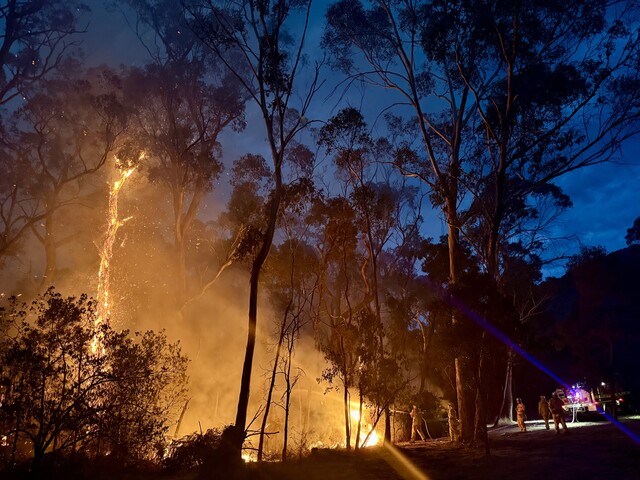
“Given the long history of major fires and property losses, and the intensifying effect of a hotter climate, fires in these areas can be unstoppable, moving too fast and burning too hot for any fire service to control, especially where dense forest meets streets and back fences,” Mr Mullins said.
“We are also seeing more fires that generate their own violent weather, including fire thunderstorms like those on Black Saturday 2009, that can throw embers and lightning well ahead of the main front.
“In Los Angeles, a modern city with well-resourced fire services, more than 16,000 structures were lost in a single firestorm when extreme wind, drought and urban sprawl collided.”
Despite being in the middle of winter in January 2025, the firestorm in LA killed 31 people and destroyed more than 16,000 structures despite a very well-resourced fire department doing their best to combat the blaze.
The record dryness, non-arrival of a typical annual wet season and wind gusts up to 160 km/h contributed to the disaster, which the report argues are evidence of the impact of climate pollution and not dissimilar to the extrme fire conditons experienced in Australia.
Mr Mullins said they have three priorities for improving resilience to bushfire.
“Cut climate pollution from coal, oil and gas, because burning more fossil fuels is like pouring petrol on the fire,” he said.
“Second, make homes and neighbourhoods harder to burn: targeted retrofits for older houses, safer planning at the urban fringe, and clear evacuation options and refuges that can cope on the worst days.
“Third, boost frontline capacity at the edges of our cities with more local crews, land management staff, and better warnings and hazard reduction burning, because these are the growth corridors now in the firing line.”
According to the report, the growth in populations for outer-metropolitan areas like the Outer East also presents significant risk, with the figure having more than doubled in Melbourne in the past two decades and more than 6.9 million Australians now living where suburbs meet the bush.
A large number of these people may also be living in homes that are not built to bushfire-resilient standards, just like many in LA. 90 per cent of Australian homes in high-risk fire zones were also built before modern bushfire standards existed, increasing their chances of ignition due to ember attack and house-to-house fire spread.
Mr Mullins said climate pollution is driving more explosive fire conditions and more frequent serious fire seasons in Victoria.
“This increases the risk of bad fires turning disastrous, just like Victorians experienced over the past week when intense fire weather hit. The old rules no longer apply,” he said.
“Fire seasons are longer, fires are behaving more violently and erratically, and warmer nights often rob firefighters of the cooler conditions they once relied on to control blazes. We cannot keep expanding into risk and then act surprised when disaster hits.
“Protecting lives on the fringe of cities and large rural centres means turning off the tap on climate pollution, and better preparing communities and emergency services for the more frequent and intense fire weather we are already living with.”